Three Kings Cake 🎄
Three Kings Cake 🎄
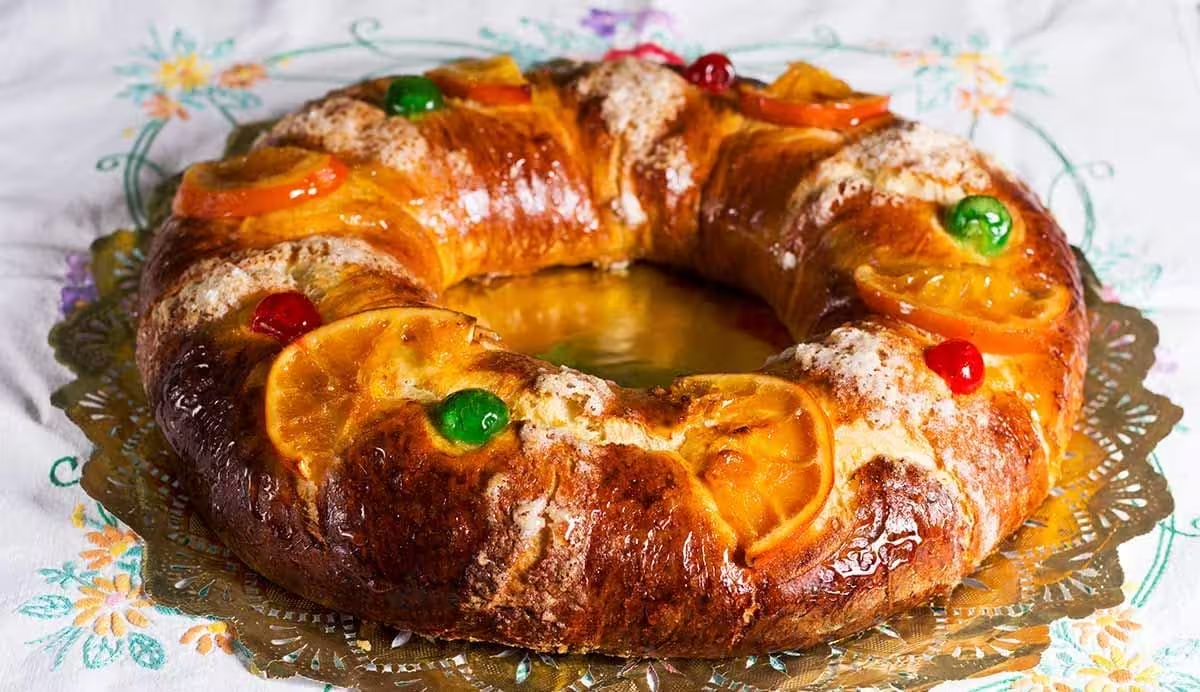
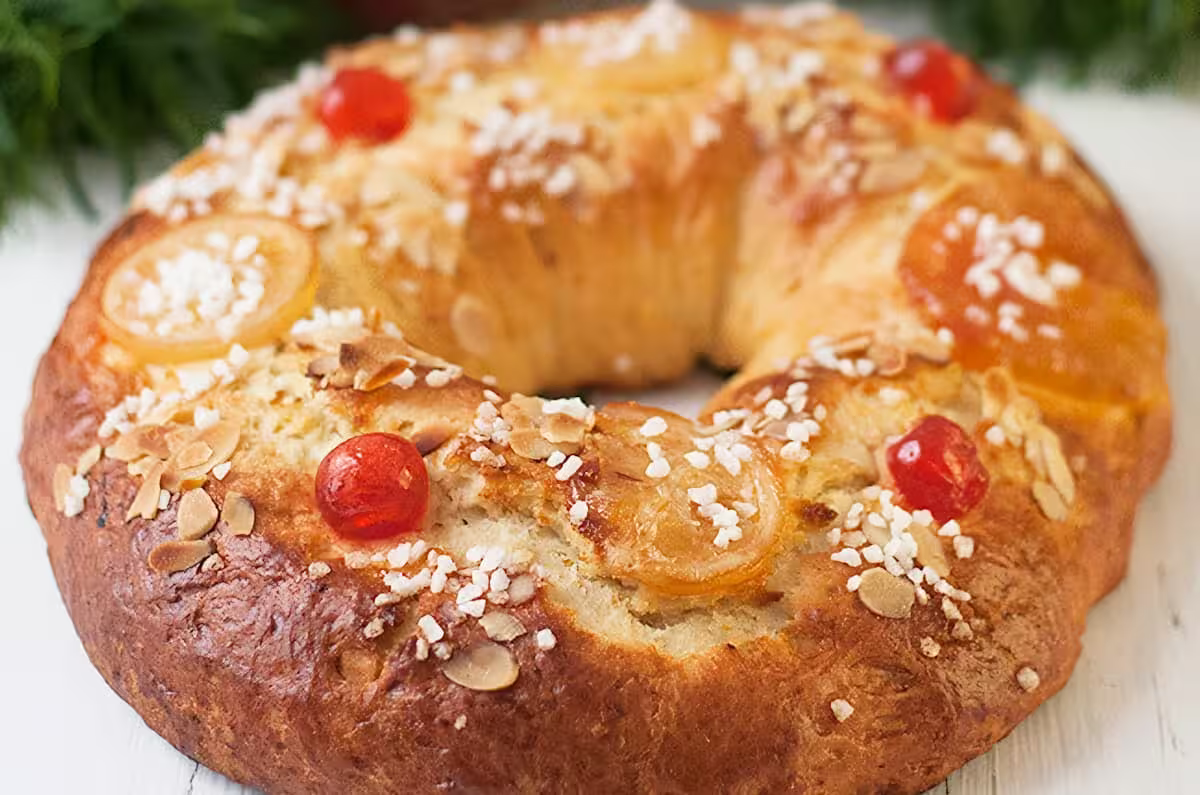
Known as Roscón de Reyes (Spain) or Rosca de Reyes (Latin America), this fragrant crown‑shaped brioche is traditionally enjoyed on January 6th for Epiphany. Perfumed with orange blossom water and citrus zest, it’s topped with jewel‑like candied fruits—often with a tiny figurine hidden inside for good luck.
History & cultural background
The tradition dates back centuries, celebrating the arrival of the Three Kings. The ring shape symbolizes a crown, while candied fruits evoke jeweled adornments. A hidden figurine (and sometimes a bean) adds playful ritual—finder’s luck and, in some regions, a playful task of providing next year’s cake.
Ingredients
- 500 g strong bread flour 🌾
- 100 g sugar 🍬
- 100 ml lukewarm milk 🥛
- 25 g fresh yeast 🍞
- 2 eggs 🥚🥚
- 60 ml orange blossom water 🍊
- Zest of one orange and one lemon 🍋
- 100 g butter, room temperature 🧈
- Candied fruits for decoration 🍒
- Powdered sugar for dusting
- 1 beaten egg, for brushing
Step-by-step Instructions
- Make the dough (15–20 minutes)
- Dissolve the yeast in lukewarm milk (not hot). In a bowl, combine flour, sugar, and citrus zest. Add the milk‑yeast mixture, eggs, and orange blossom water. Mix until a shaggy dough forms.
- Knead 8–10 minutes (stand mixer on medium‑low) until smooth and slightly tacky, then add the softened butter in pieces. Continue kneading until the dough is elastic and pulls from the bowl sides. It should windowpane when stretched.
- First rise (1½–2 hours)
- Shape into a ball, place in a lightly oiled bowl, cover, and proof in a warm, draft‑free spot until doubled. It should slowly spring back when gently pressed.
- Shape the crown (1 hour second rise)
- Turn the dough out and form a ring: poke a hole in the center and gently stretch to 18–22 cm across (it will spring back). Transfer to a parchment‑lined tray. Cover and proof until puffy and slightly jiggly, 45–60 minutes.
- If using a figurine/bean, tuck it into the underside of the dough now. Note for guests before serving.
- Decorate and bake (25–30 minutes)
- Preheat oven to 180°C (350°F). Brush the dough with beaten egg. Arrange candied fruits on top and sprinkle with coarse sugar if you like.
- Bake 25–30 minutes until deep golden and the loaf sounds hollow when tapped (internal temp ~92–95°C/198–203°F). Cool on a rack.
- Finish and serve
- Dust with powdered sugar. Serve plain or split horizontally and fill with lightly sweetened whipped cream or pastry cream.
Variations & serving ideas
- Classic fill: Whipped cream (stabilized with a spoon of mascarpone) or vanilla pastry cream.
- Nutty crunch: Add sliced almonds on top before baking.
- Citrus boost: Brush the warm cake with a quick orange syrup (equal parts sugar and orange juice) for shine and extra aroma.
- Serve with hot chocolate or café con leche.
Baker tips & storage 💡
- Don’t rush the butter: Add it after the gluten develops for the best structure.
- Proof by feel, not just time: Look for a slow spring‑back when gently poked.
- Even color: Rotate the tray in the last 10 minutes if needed.
- Storage: Keeps 2 days at room temp (wrapped). For longer storage, freeze slices up to 2 months. If filled with cream, refrigerate and enjoy within 24 hours.
- Safety: If hiding a figurine, warn guests and avoid placing it near the surface for safer slicing.
Fun facts 🧠
- In many homes, whoever finds the figurine becomes “king” or “queen” of the day.
- Some regions hide both a figurine and a dried bean—the bean may bring the bill for the cake!
Serving suggestions 🍊☕
- Split and fill with lightly sweetened whipped cream or pastry cream just before serving.
- Serve with hot chocolate, café con leche, or orange‑scented tea.